Everyone knows the name Grace Kelly (1929-1982). But do they know the person behind that name? Is she the glamorous movie star who took the mid-1950s by storm and then gave it all up to marry a prince? Or is she the shy girl, who did not quite fit in with the athletic and outgoing Kelly clan?
Quiet Grace
Grace Patricia Kelly is all of the above. The third of four children, Grace was quiet and solitary in contrast to her older sister, Peggy, older brother John, and younger sister Lizanne. How she became a movie icon is a Hollywood story if ever there was one, but it’s also about timing. If there weren’t a Grace Kelly in the mid-1950s, we would have had to invent her.
New girl in town
Kelly was part of a new crop of female movie stars, a crop that also included
Audrey Hepburn 
and
Sophia Loren
, groomed during the waning days of the old studio system. She signed a seven-year contract with MGM, but they didn’t seem to know what to do with her. Her best movie roles came by way of other studios on loan outs.
 Mogambo
(1953), was her biggest role at this point in her career. She played opposite two undisputed superstars:
Clark Gable 
and
Ava Gardner
. But she almost didn’t get that role.
Gene Tierney 
(who starred with Gable in
Never Let Me Go that same year) was director John Ford’s (and MGM’s) first choice. Due to her developing mental illness, Tierney had to drop out. It was then that Kelly was given the role of the unfaithful wife who falls for Gable’s character, but loses him in the end. For this role, Kelly received an Academy Award nomination as Best Supporting Actress. But even with the nomination, Kelly’s stardom wasn’t a sure thing.
 The New York Times
’s movie critic, Bosley Crowther gave a rather lukewarm review of
Mogambo, waiting until the very last paragraph (first sentence of a two-sentence paragraph at that) to even mention Kelly. That was all about to change; the public and Crowther would soon take notice.
Kelly gets noticed

In 1953,
Alfred Hitchcock 
was searching for a female lead for a film he was directing at Warner Bros.,
Dial M for Murder
. While looking for an actress to cast, he reviewed an old screen test Kelly had done at Twentieth Century Fox and watched
Mogambo. While Hitchcock thought Kelly was stiff, if not a bit wooden, he saw that she had potential. Almost immediately, the master of suspense started to mold Kelly into the prototypical cool Hitchcock blond. When
Dial M for Murder was released, the reviews were good, some even thinking it better than the stage play upon which it was based. This time, Crowther mentioned Kelly in the sixth paragraph (out of seven) of his review saying, “Grace Kelly does a nice job of acting the wife's bewilderment, terror and grief.” From the likes of Crowther, that was absolutely glowing praise.
Edie Doyle or Lisa Fremont?

Almost on the back of filming
Dial M for Murder, Hitchcock requested Kelly’s services again for
Rear Window. At the time the role of Lisa Carol Fremont was offered to her, Kelly was considering the role of Edie Doyle for
On the Waterfront,
the role that eventually went to
Eva Marie Saint
. Kelly loved the
Rear Window script and decided she'd rather portray a model from Manhattan than a middle-class girl from New Jersey. She could not have imagined how fortuitous a choice that would be.
Once again, Hitchcock took complete control of Kelly’s image and introduced her to screenwriter, John Michael Hayes. As Hayes would state in an interview before his death in 2008, Hitchcock asked him to get to know Kelly and study her speech patterns. Hayes was instructed to write dialogue that would seem natural coming out of Kelly’s mouth. Hitchcock thought (and rightly so) that if Kelly collaborated with Hayes on some of her dialogue, her characterization would avoid the stiffness of some of her earlier roles. The fact that Hayes’s wife was a former model made him the perfect person to write for Kelly.

Another person Hitchcock introduced to Kelly was renowned costume designer
Edith Head.
Under Hitchcock’s direction, Head went to work on creating a wardrobe that would be true to Kelly’s character as well as showcase her incredible beauty. With Kelly, Head had a clean canvas upon which she could create a look that was stylish, chic, and deceptively simple in design.
When
Rear Window opened at the Rivoli in August of 1954, 2,000 people attended the premier, a benefit for the American-Korean Foundation. It was an immediate commercial and critical success and people took notice of Grace Kelly in what would become an iconic role for the then 25-year-old actress.
Five movies in one year!

In 1954, moviegoers couldn’t avoid Grace Kelly. That year, she had no fewer than five films in release:
Dial M for Murder (May),
Rear Window (August),
The Country Girl
,
The Bridges at Toko-ri
, and
Green Fire 
(December). For her performance in
The Country Girl, she was awarded the Best Actress Academy Award for 1955. The competition was unusually stiff that year, with Kelly besting Dorothy Dandridge (
Carmen Jones
), Jane Wyman (
Magnificent Obsession
), Audrey Hepburn (
Sabrina
), and Judy Garland (
A Star is Born
). Garland was the sentimental and the odds-on favorite, so Kelly’s win was a bit of a shock to many. Supposedly, six votes separated the two stars.
A star is born and then she's gone

As quickly as Kelly’s star rose, so did her departure from Hollywood. She would have one film released in 1955,
To Catch a Thief
, again working with Hitchcock and Edith Head. In 1956, she would have two films in release,
The Swan
and
High Society
, which would be her last. On April 19, 1956, Kelly wed Prince Rainier of Monaco. Rumors of a comeback never materialized. Grace Kelly remained Princess Grace of Monaco until her traffic death in a car accident on September 14, 1982. She was 52 years old.
 Barbara Stanwyck and Katharine Hepburn win movie star poll
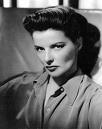 Hepburn is the Academy Award champ, winning four competitive Oscars in the Best Actress category. Stanwyck never won a competitive Oscar, but was nominated for Best Actress four times, the last time in 1949 for Sorry Wrong Number
 . But the role that Stanwyck is most identified with is for her portrayal of the ultimate femme fatale, Phyllis Dietrichson In Double Indemnity
 .
. Bette Davis won two competitive Oscars, and was nominated a total of 11 times for Best Actress (the first was a write-in nomination for Of Human Bondage
 ). The award she won for Dangerous
 in 1935 was considered by many to be a consolation prize for losing the year before (Of Human Bondage was released in 1934).
 Before Carole Lombard married Clark Gable, she lived next door to Claudette Colbert. At the time, both were top stars at Paramount studios, often competing for the same roles. Colbert excelled at both comedy and drama, but received her only Best Actress award for It Happened One Night
 , costarring Lombard's future husband, Gable. Ironically, Lombard was offered the role of Ellen Andrews, wanted, but was committed to making a movie with George Raft. Lombard never won an Academy Award and was only nominated once for her breakout role as Irene Bullock in My Man Godfrey
 . At the time of her death in 1942, Lombard was the highest paid actress in Hollywood with a bright future ahead of her. It's impossible to know what awards might have come her way had she lived.
 By all accounts, Joan Crawford loved being a movie star. For years, she answered her own fan mail and autographed her own photographs for distribution, when a lot of other stars allowed others to forge their signatures. A major movie star since the silent picture days, Crawford remained a major force in Hollywood until the early 1960s. She won her only Academy Award for her performance as a self-sacrificing mother in Mildred Pierce
 , a role that was supposed to go to Barbara Stanwyck. Director, Michael Curtiz didn't want to work with Crawford. Desperate for the role, Crawford agreed to a screen test, which was unheard of for a star of Crawford's caliber, but it won Curtiz over.

 (1945),
  , and Margie (both 1946). But in 1949 she really hit her stride with three critical and financial successes:
  , The Fan, and
  . Not only that, but she worked with three uniquely talented directors in each of those films. For A Letter to Three Wives, Crain worked with
  ; for The Fan, Crain worked with Otto Preminger; and for Pinky, Crain worked with the legendary
  .
. 
 , called her the "Julia Roberts of the day."
 that he slated many of the plum female roles for her. One problem for Crain was that she was seemingly always pregnant, which frustrated Zanuck to no end and resulted in Crain losing out on some great parts.
 (1950). Mankiewicz didn't think Crain could be tough enough in the role, but I think it would have been a brilliant move to cast Crain against type. (I mean no disrespect to Anne Baxter, who was superb.) But imagine audiences discovering that sweet Jeanne Crain was a cold, calculating villain. From Zanuck's perspective, it made sense to cast Crain in that role because she would have been a huge box office draw. Pinky was the biggest grossing film of 1949, and Bette Davis's star power was greatly diminished. With all the acclaim Eve got, it wasn't a huge box office hit; with Crain in the picture, it might have hit box office gold.
 ), but it was an acknowledgement that Crain was more than just a pretty face. And a pretty face she was, indeed.